70-procentsregeln har vänt The 70 percent rule has turned
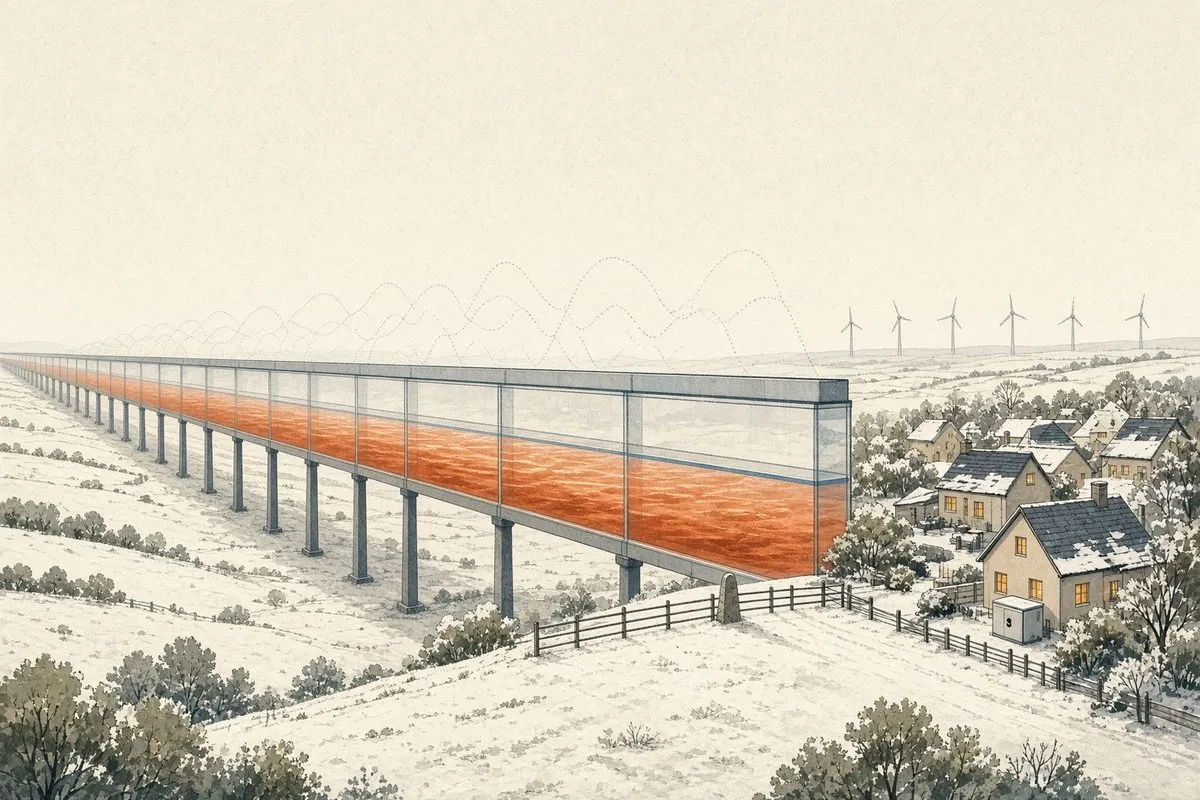
Illustration skapad med AI (Grok).
En kall morgon i SE4 är importkapaciteten från norr och från kontinenten det som avgör priset. Hur mycket av den kapaciteten som faktiskt bjuds ut till marknaden bestäms inte av kablarnas fysiska gräns utan av en beräkning, och sedan 2020 har den beräkningen haft en regel i botten: minst 70 procent av varje kritisk ledningsdels kapacitet ska göras tillgänglig för handel över elområdesgränser. Regeln finns i EU:s elmarknadsförordning och har i den nordiska metoden för flödesbaserad kapacitetsberäkning tolkats som ett golv. TSO:erna förväntades använda kostsamma motåtgärder (omdirigering och motköp) för att komma över 70 procent där det var samhällsekonomiskt motiverat, i vissa fall till och med erbjuda “virtuell kapacitet” över den fysiska gränsen och hantera följderna i realtid.
Nu har förutsättningarna ändrats, i två steg som få lade märke till. I oktober 2025 avgjorde EU:s tribunal ett mål mellan den tyska tillsynsmyndigheten BNetzA och ACER, och slog fast att när 70 procent har nåtts är ett krav på ekonomisk effektivitetsprövning av ytterligare åtgärder inte rättsligt bindande. De nordiska TSO:erna läser det som att ett stamnätsföretag som tillhandahåller 70 procent har uppfyllt sina skyldigheter och att det inte finns någon rättslig plikt att gå längre. I maj i år lämnade de fyra nordiska TSO:erna in den tredje ändringen av sin kapacitetsberäkningsmetod till Ei och de andra nordiska tillsynsmyndigheterna, och där är konsekvensen utskriven. Kostsamma motåtgärder får framöver bara definieras för tre situationer: att nå 70 procent, att hantera tillfälliga avbrott och försenade investeringar, och att tillåta tillfällig överlast i N-1-situationer. Virtuell kapacitet överges helt. Golvet har i praktiken blivit taket för vad TSO:n förväntas åstadkomma med kostsamma åtgärder.
Det är värt att vara tydlig med vad som har vänt och inte. Kablarna kan fortfarande köras nära sin fysiska gräns när nätet tillåter det; regeln handlar om hur mycket TSO:n är skyldig att köpa sig till med motåtgärder vid kapacitetsbrist. Skillnaden är stor för just de timmar som spelar roll. En bister vintermorgon är det ansträngda nätet normalfallet, och då kunde den gamla tolkningen ge marknaden mer kapacitet än den nya kommer att göra.
TSO:ernas motivering är inte bara juridisk. De pekar på en nordisk välfärdsanalys som säger att virtuell kapacitet i ett system med många små elområden och knappa balansreserver kostar mer i realtidsomdirigering än den ger tillbaka i marknadsvinst. Det är ett rimligt argument, och jag tror det finns fog för det. Men det byter ut en princip mot en annan utan att säga det rakt ut: från “så mycket kapacitet som är samhällsekonomiskt motiverat” till “så mycket som regelverket kräver, och inte mer”. För marknadsaktörerna är det senare lättare att förutse, men det förra oftast mer värt.
Vem berörs? I första hand den som handlar el i SE4 och lever på importen. I andra hand den vars flexibilitet prissätts av spreaden mellan SE3 och SE4: mindre kapacitet över gränsen i ansträngda timmar betyder, allt annat lika, större prisskillnader och därmed mer värde i att kunna flytta last på rätt sida om snittet. Och förstås Svenska kraftnät självt, vars flaskhalsinkomster växer med prisskillnaderna, samtidigt som kostnaden för motköp minskar. Ingen av dessa effekter är avsedd, men alla följer av samma beslut.
Ändringspaketet innehåller mer än 70-procentsfrågan, och en del av det är regelrätt underhåll: säkerhetsmarginalen delas i en förutsägbarhetsdel och en FCR-del med ett uttalat 95-procentsmål, de kombinerade dynamiska begränsningarna görs permanenta, produktionsnycklarna standardiseras. TSO:erna kunde däremot inte enas om huruvida ledningar mellan elområden alltid ska ingå i beräkningen även när deras påverkan är liten, med Fingrids gräns mot norra Norge som konkret fall; de lämnade in en gemensam text med den gamla lydelsen och redogjorde för oenigheten i en separat not till tillsynsmyndigheterna. Det är ovanligt transparent, vilket säger något om att metoden kanske inte är färdigtänkt.
Det som gör frågan aktuell just nu är processen. Ei tar emot synpunkter från branschorganisationer, elhandlare, producenter och elanvändare till den 1 oktober, med ärendenummer 2026-103735 i ämnesraden, och de nordiska tillsynsmyndigheterna ska fatta beslut senast den 19 november. Metoden styr hur kapaciteten över de nordiska elområdesgränserna beräknas, och den här ändringen är den första sedan flödesbaserad beräkning infördes hösten 2024. De kommande fyra veckorna finns det alltså fortfarande tillfälle att säga vad man tycker om att det tidigare golvet blev ett tak.
Illustration made with AI (Grok).
On a cold morning in SE4, import capacity from the north and from the continent is what sets the price. How much of that capacity is actually offered to the market is decided not by the physical limit of the cables but by a calculation, and since 2020 that calculation has had a rule at its base: at least 70 percent of each critical network element’s capacity must be made available for trade across bidding-zone borders. The rule sits in the EU Electricity Market Regulation, and in the Nordic method for flow-based capacity calculation it was read as a floor. TSOs were expected to use costly remedial actions, redispatch and countertrading, to get above 70 percent where it was economically justified, in some cases even to offer “virtual capacity” beyond the physical limit and manage the consequences in real time.
The conditions have now changed, in two steps that few people noticed. In October 2025 the EU General Court decided a case between the German regulator BNetzA and ACER, and held that once 70 percent has been reached, a requirement to test further measures for economic efficiency is not legally binding. The Nordic TSOs read this as meaning that a TSO providing 70 percent has met its obligations and that there is no legal duty to go further. This May, the four Nordic TSOs submitted the third amendment to their capacity calculation methodology to Ei and the other Nordic regulators, and the consequence is written out. Costly remedial actions may henceforth be defined for three situations only: reaching 70 percent, managing temporary outages and delayed investments, and permitting temporary overload in N-1 situations. Virtual capacity is abandoned altogether. The floor has in practice become the ceiling of what the TSO is expected to deliver with costly measures.
It is worth being clear about what has turned and what has not. The cables can still be run close to their physical limit when the grid allows it; the rule is about how much the TSO is obliged to buy its way to with remedial actions when capacity is short. The difference is large for exactly the hours that matter. On a bitter winter morning, the strained grid is the normal case, and that is when the old reading could give the market more capacity than the new one will.
The TSOs’ reasoning is not only legal. They point to a Nordic welfare analysis holding that virtual capacity, in a system with many small bidding zones and scarce balancing reserves, costs more in real-time redispatch than it gives back in market gains. That is a reasonable argument, and I think there is substance to it. But it swaps one principle for another without quite saying so: from “as much capacity as is economically justified” to “as much as the rulebook requires, and no more”. For market participants the latter is easier to predict, but the former usually worth more.
Who is affected? First, anyone trading electricity in SE4 and living off imports. Second, anyone whose flexibility is priced by the spread between SE3 and SE4: less cross-border capacity in strained hours means, all else equal, wider price differences and therefore more value in being able to move load on the right side of the cut. And, of course, Svenska kraftnät itself, whose congestion income grows with price differences while its countertrading costs fall. None of these effects is intended, but all of them follow from the same decision.
The amendment package contains more than the 70 percent question, and some of it is plain maintenance: the reliability margin is split into a forecast-uncertainty part and an FCR part with a stated 95 percent target, the combined dynamic constraints are made permanent, the generation shift keys are standardised. The TSOs could not, however, agree on whether cross-zonal network elements should always be included in the calculation even when their influence is small, with Fingrid’s border to northern Norway as the concrete case; they submitted a joint text with the old wording and set out the disagreement in a separate note to the regulators. That is unusually transparent, which says something about the method perhaps not being finished thinking.
What makes the question timely is the process. Ei is taking comments from industry organisations, retailers, producers and consumers until 1 October, citing case number 2026-103735 in the subject line, and the Nordic regulators must decide by 19 November. The methodology governs how capacity across the Nordic bidding-zone borders is calculated, and this amendment is the first since flow-based calculation went live in autumn 2024. So for the next four weeks there is still time to say what you think about the former floor becoming a ceiling.